
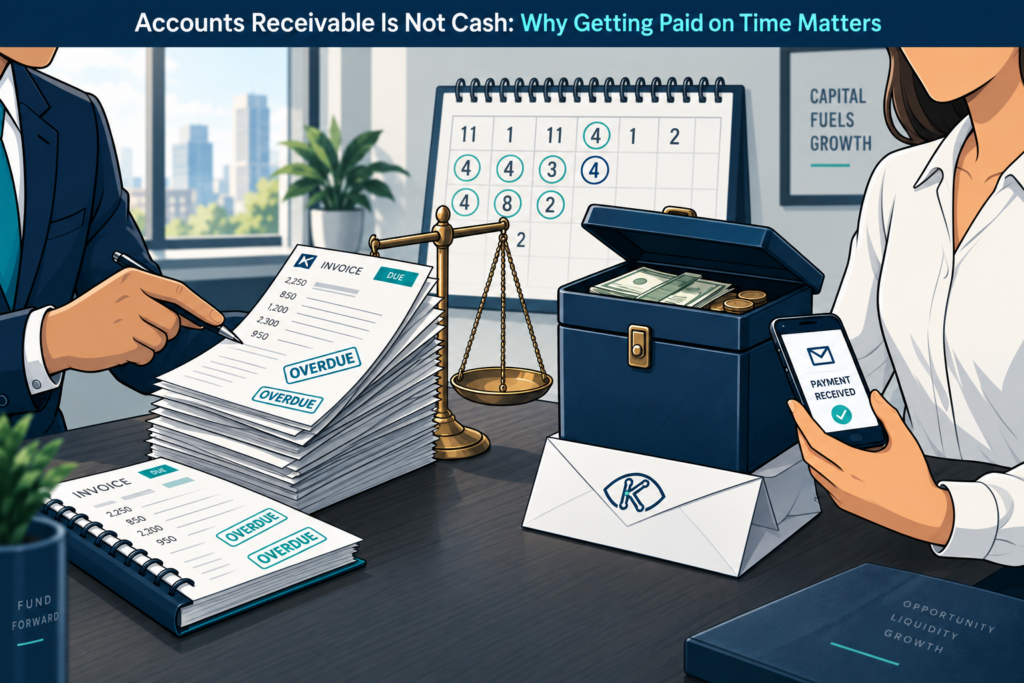
A healthy sales pipeline and a full accounts receivable ledger can feel like proof that your business is thriving. But revenue on paper is not the same as money in the bank. Until an invoice is paid, it is not cash. It is a promise, and promises don’t cover payroll, rent, or supplier bills.
Too many businesses run into trouble not because they lack customers or sales, but because they lack liquidity. Understanding the difference between being profitable and being cash-strong is one of the most important lessons in running a company that survives and grows.
What Accounts Receivable Really Represents
Accounts receivable (AR) is the total amount your customers owe you for goods or services already delivered. It shows up as an asset on your balance sheet, and it counts toward revenue on your income statement. But an asset you cannot spend does not help you meet today’s obligations.
Every dollar sitting in AR is a dollar that isn’t available to buy inventory, cover a payroll run, or take advantage of a growth opportunity. The longer that dollar sits unpaid, the more it costs you in opportunity, and the more risk you carry.
The Real Cost of Slow-Paying Customers
Late payments do more than create inconvenience. They create a chain reaction throughout your business.
Cash Flow Gaps
When customers pay on 60- or 90-day terms, but your own expenses are due weekly or monthly, you are left funding the gap yourself. That often means dipping into savings, delaying your own vendor payments, or relying on high-interest credit.
Missed Opportunities
Cash tied up in unpaid invoices is cash you cannot use to negotiate early-payment discounts with suppliers, hire needed staff, or take on a new contract that requires upfront costs.
Increased Financial Stress
Chasing down payments consumes time and energy that should be spent running and growing the business. It also creates uncertainty, making it harder to plan confidently for the future.
Profitable on Paper, Broke in Practice
It is entirely possible to be profitable and still run out of cash. A business can have strong margins and a full order book, and still struggle to make payroll because the money owed to it hasn’t arrived yet. This is one of the most common reasons growing businesses fail: growth increases the gap between delivering work and getting paid for it.
The businesses that survive this stage are the ones that recognize the problem early and take action, rather than assuming the money will show up eventually.
Closing the Gap Between Invoicing and Getting Paid
There are several ways businesses address the mismatch between AR and actual cash flow.
Tighter Payment Terms
Shortening payment terms, requiring deposits, or offering small discounts for early payment can encourage customers to pay faster.
Consistent Collections Processes
Following up on invoices promptly and consistently, rather than waiting until a payment is significantly overdue, keeps receivables moving instead of stacking up.
Invoice Factoring
For many businesses, the fastest and most reliable solution is converting receivables into cash immediately, rather than waiting on customer payment schedules. Invoice factoring allows a business to sell its unpaid invoices for immediate funding, turning AR into working capital without taking on debt or waiting out long payment terms.
Why This Matters for Growing Businesses
Growth is supposed to be a good problem. But growth often means more invoices outstanding at any given time, which means a larger gap between work performed and cash collected. Businesses that don’t plan for this gap can find themselves unable to fund the very growth that created it.
Treating accounts receivable as a cash flow tool, not just a revenue metric, changes how a business plans, hires, and takes on new opportunities.
The Bottom Line
Revenue matters. Profit matters. But neither one pays your bills — cash does. Accounts receivable represents money you are owed, not money you have. The businesses that thrive are the ones that manage that distinction carefully, using strong collections practices and flexible funding tools like invoice factoring to keep cash moving as fast as their business does.
Keen Funding helps businesses turn outstanding invoices into immediate working capital, closing the gap between delivering work and getting paid for it.