
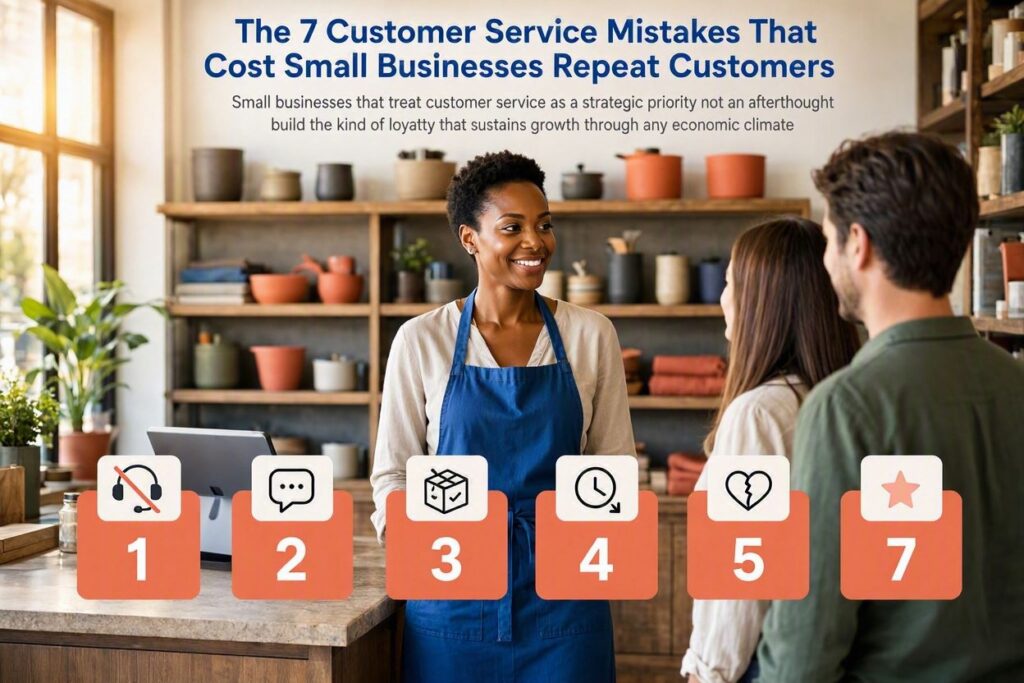
Repeat customers are the backbone of any successful small business. They spend more, refer others, and cost far less to retain than new customers do to acquire. Yet every day, small businesses quietly hemorrhage loyal clients through entirely preventable service failures.
The hard truth is that most customers who leave never tell you why. They simply stop returning. Understanding the mistakes that drive them away is the first step toward building the kind of customer experience that keeps people coming back.
1. Making Customers Repeat Themselves
Nothing signals disorganization faster than asking a customer to re-explain their situation to a second or third team member. Whether it happens during a phone transfer or a follow-up appointment, the message it sends is clear: your time does not matter here.
Invest in systems that keep customer history accessible to everyone on your team. A basic CRM tool can eliminate this friction entirely and make every interaction feel personal rather than procedural.
2. Slow Response Times
Speed is a form of respect. When a customer sends an email or leaves a voicemail and waits two days for a response, they are not simply waiting — they are reconsidering whether your business deserves their loyalty.
Set internal response time standards and hold your team accountable to them. Even a brief acknowledgment that a full response is coming goes a long way toward preserving trust during busy periods.
3. Treating Complaints as Inconveniences
A complaint is not an attack — it is an opportunity. Customers who complain are actively giving you a chance to fix something and earn stronger loyalty in the process. Customers who do not complain simply leave.
Train your team to receive negative feedback with gratitude and urgency. A complaint handled well can turn a frustrated customer into one of your most vocal advocates.
4. Inconsistent Service Quality
Inconsistency is one of the most damaging forces in customer retention. When a customer’s experience varies dramatically depending on who helps them or what day they visit, they cannot rely on your business — and reliability is exactly what repeat customers are buying.
Standard operating procedures, regular team training, and clear service benchmarks create the consistency that turns first-time buyers into regulars.
5. Failing to Follow Up
The sale is not the finish line. Small businesses that disappear after a transaction miss the single most powerful moment to deepen a customer relationship. A follow-up call, a check-in email, or even a handwritten note communicates that your interest in the customer extends beyond their wallet.
Build follow-up touchpoints into your process deliberately. What feels like a small gesture to you often feels remarkable to the customer receiving it.
6. Overpromising and Underdelivering
The temptation to tell customers what they want to hear in the moment is understandable. The cost of doing so is severe. When expectations are set high and reality falls short, the disappointment is amplified — and so is the likelihood that customer will not return.
Commit to honest, conservative commitments. When you consistently deliver more than you promised, you build a reputation that no marketing budget can manufacture.
7. Neglecting Long-Term Customers in Favor of New Ones
New customer acquisition often gets the spotlight while loyal, long-standing customers quietly receive less attention, fewer perks, and less personalized service. This imbalance is noticed. Customers who have supported your business for years expect — and deserve — to feel valued above walk-in traffic.
Create deliberate recognition for your loyal customer base. Exclusive offers, early access, or simply remembering their name and preferences sends a message that their history with you matters.
The Cost of Getting This Wrong
Research consistently shows that acquiring a new customer costs five to seven times more than retaining an existing one. Every repeat customer lost to a preventable service failure is not just a missed sale — it is a compounding loss of future revenue, referrals, and goodwill.
Small businesses that treat customer service as a strategic priority — not an afterthought — build the kind of loyalty that sustains growth through any economic climate.
At Keen Funding, we understand that running a small business means managing countless priorities at once. When you are ready to invest in the systems, training, or capacity that elevates your customer experience, the right funding partner makes that possible. Reach out to our team to explore flexible financing solutions built for businesses like yours.