
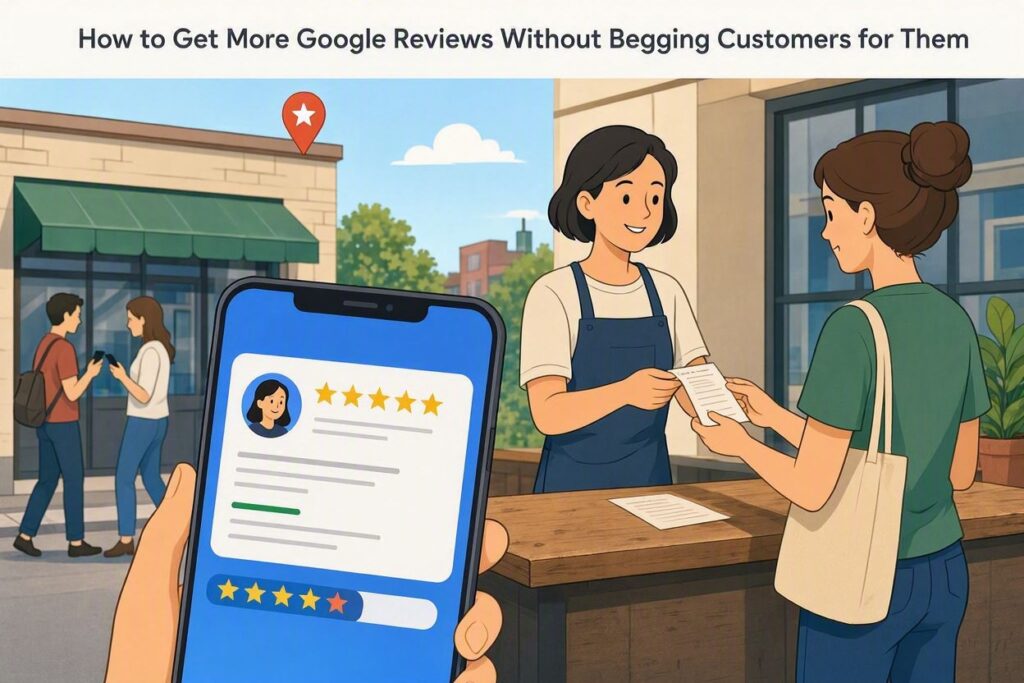
Google reviews drive trust, rankings, and revenue. Most business owners know this. The problem is the ask. Chasing customers for reviews feels awkward, comes across as desperate, and usually gets ignored. There’s a better way to build a steady stream of reviews without ever sounding like you’re begging.
Make the Review a Natural Next Step, Not a Favor
Customers leave reviews when it feels like part of the experience, not an added chore. The goal is to build the request into a moment that already exists in your process, right after a job is finished, a payment is made, or a delivery is confirmed. When the ask feels routine instead of personal, customers respond without hesitation.
Time It Right
Timing matters more than wording. Ask immediately after a positive interaction, when satisfaction is highest. Waiting days or weeks after the fact drops response rates significantly because the experience is no longer top of mind.
Remove Friction From the Process
Every extra step you add cuts your response rate in half. Customers won’t search for your business on Google, then find the reviews tab, then write something original. Give them a direct link that opens the review box immediately. The shorter the path, the higher the completion rate.
Use Text and Email, Not Just Verbal Requests
Verbal requests get forgotten within minutes. A text message or email sent right after service gives customers a tangible reminder and a one-click link. This alone can multiply your review volume without changing a single word of your pitch.
Build Reviews Into Your Systems, Not Your Sales Pitch
The strongest review generation doesn’t come from asking harder. It comes from automating the ask so it happens consistently, every time, without relying on an employee to remember. Automated follow-up sequences, point-of-sale prompts, and post-service texts all remove the awkward personal request and replace it with a system that runs itself.
Let Happy Customers Self-Select
Not every customer should be asked the same way. A short survey or rating prompt before the review request lets you filter for satisfied customers and route them toward Google, while unhappy customers are directed to a private feedback channel instead. This protects your rating and keeps the process feeling helpful rather than transactional.
Give Customers a Reason, Not Just a Request
People are more likely to act when they understand the impact. A short line explaining that reviews help other customers find honest, reliable service does more than a generic ask ever will. It shifts the request from a personal favor to a contribution that benefits the community.
Respond to Every Review You Get
Replying to reviews, positive or negative, shows customers their input matters and encourages others to leave their own. It also signals to Google that your business is active and engaged, which can support your local search visibility over time.
The Bottom Line
Getting more Google reviews isn’t about pushing harder. It’s about designing a process where leaving a review is the easiest, most natural thing a satisfied customer can do. Build the system once, remove the friction, and the reviews will follow without a single awkward ask.